The Muse
A cliché: “artists like cats”. I have no idea if it’s true. No research. It’s most probably an exaggeration. A romanticism — but there is something going on under it. I see cats drawn on tombs, in book illuminations, on canvases, in prints. Egyptian Bastet stands as the true cat goddess of every home. Chat noir is on a tournée. A bunch of cats invited themselves to Louis Wain’s bachelor’s party. There is a white cat of Hiroshige and the white cat of Franz Marc. The Cat of Picasso is scary, of Bonnard — tall. Dalí’s cat jumped. Chagall’s cat is blue and flies even higher. To pet just a few.
These cats invert the cliché into a much more certain statement: cats like to appear in art. They get drawn. Portrayed. Immortalised. For cats, artists use up expensive chisels, painting supplies, canvases, and lots and lots of their time. The cat never pays, but they will sell. Why?
I am an artist. I should ask myself before asking other artists. Understand where I stand on the matter of cats. Checking my sketchbooks — I definitely draw a lot of them. Why?
The pencil hovers. The cat sits still, tail wrapped around paws, eyes half-closed. I put my hand on the paper. I make the first lines. Then — a twitch of whiskers, a turn of the head, and the pose is gone. This is the problem with sketching cats. They like to stay still. Yes. But they also like to shift states in one blink of an eye. Without warning, the cat goes from rest to alertness, to movement. I blink twice, and it’s gone. Having a model for a limited time is a challenge.
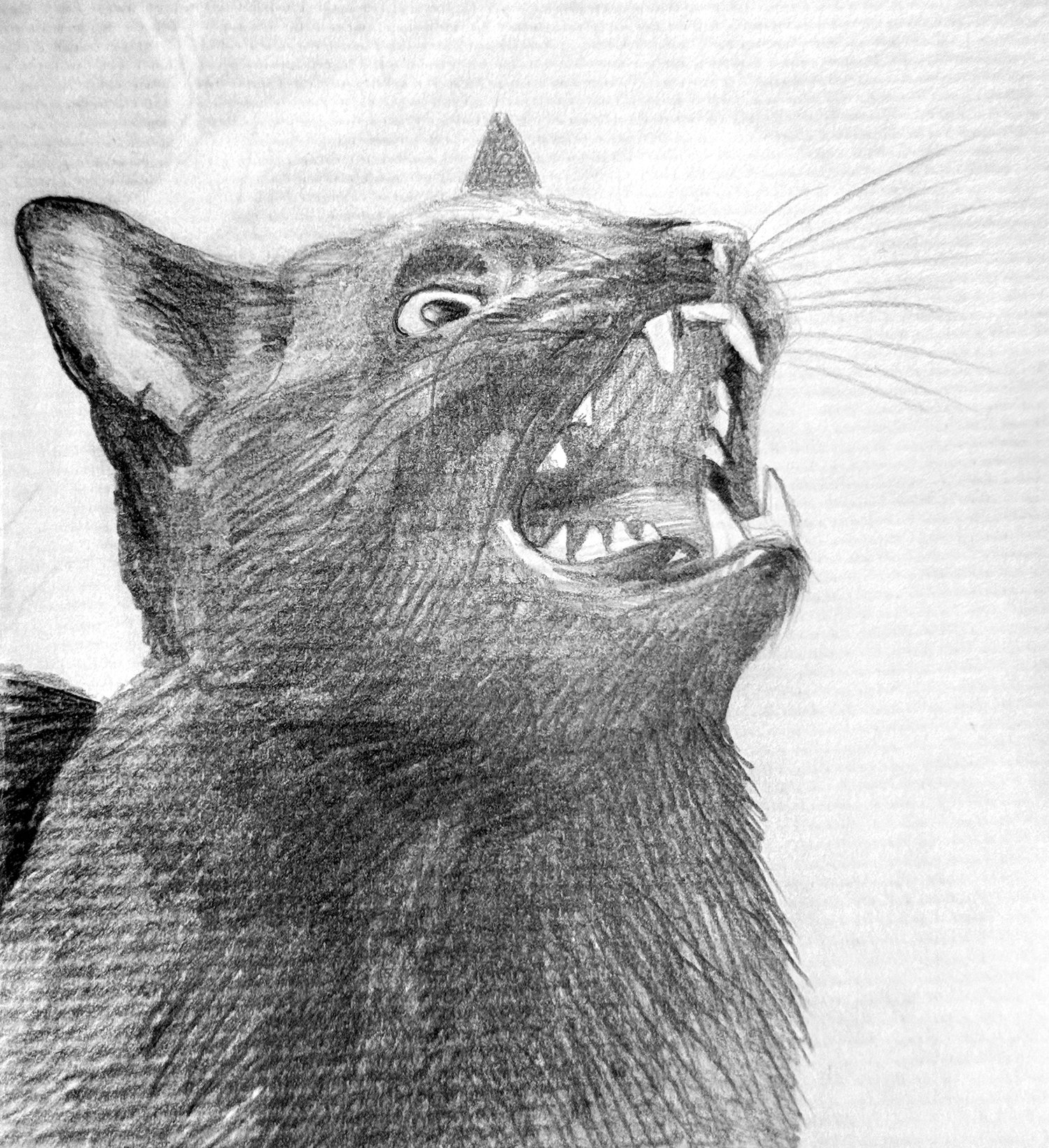
The cat carries amazing contradictions. The same paw that moves gently and softly like a little furry cloud can release sharp claws in an instant. Its pupils smoothly go from narrow vertical slits to wide circles. It invites gentle touch, then bristles. A pointy threat. Then snaps back. The cat at ease looks like a furry liquid form. It fills a box or pot, lengthens until it spills over and off the sofa, squeezes itself or goes long, like it forgot it has bones — whatever form the king or queen wants, it gets into. Relaxed — water. Alert — a bow: arched back, stiffened legs, fur puffed out, it hardens and doubles its size. A shapeshifter — no better word for this infinite set of forms. The tail twitches. Irritated, focused, amused? I can feel the meaning in every move. But I cannot translate. I draw.
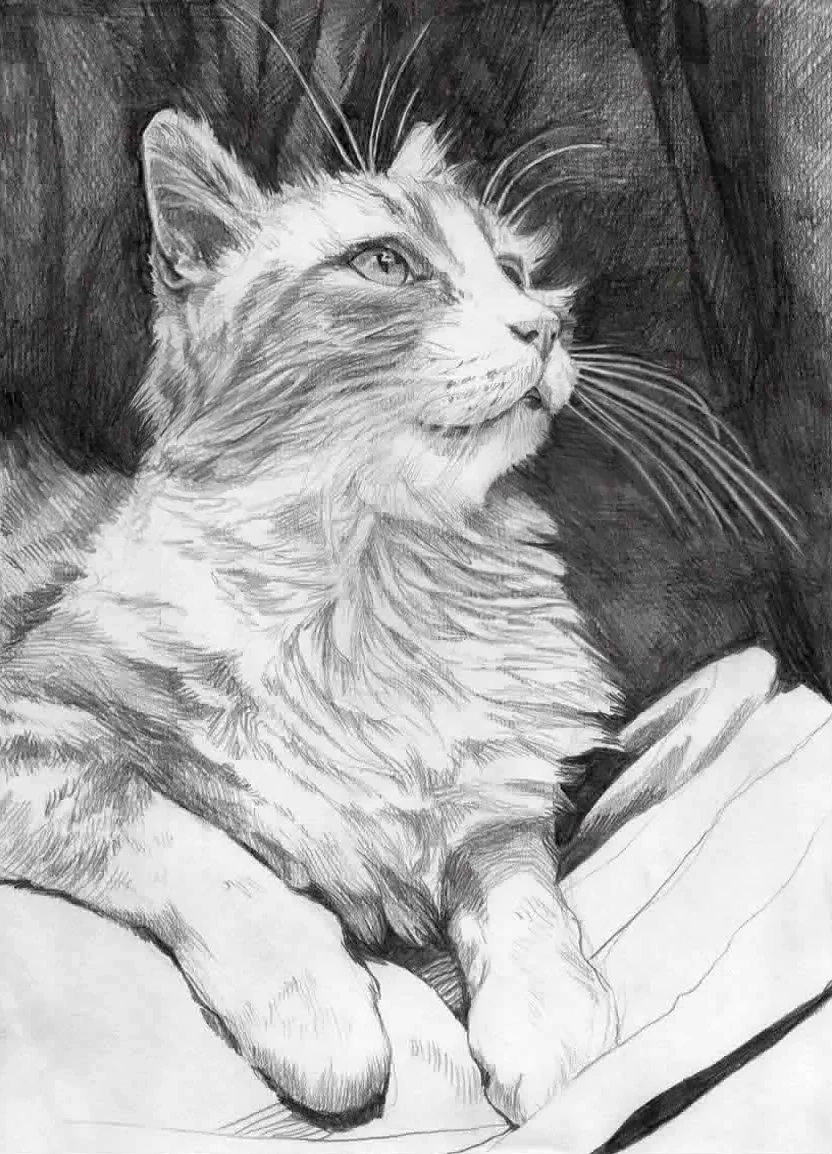
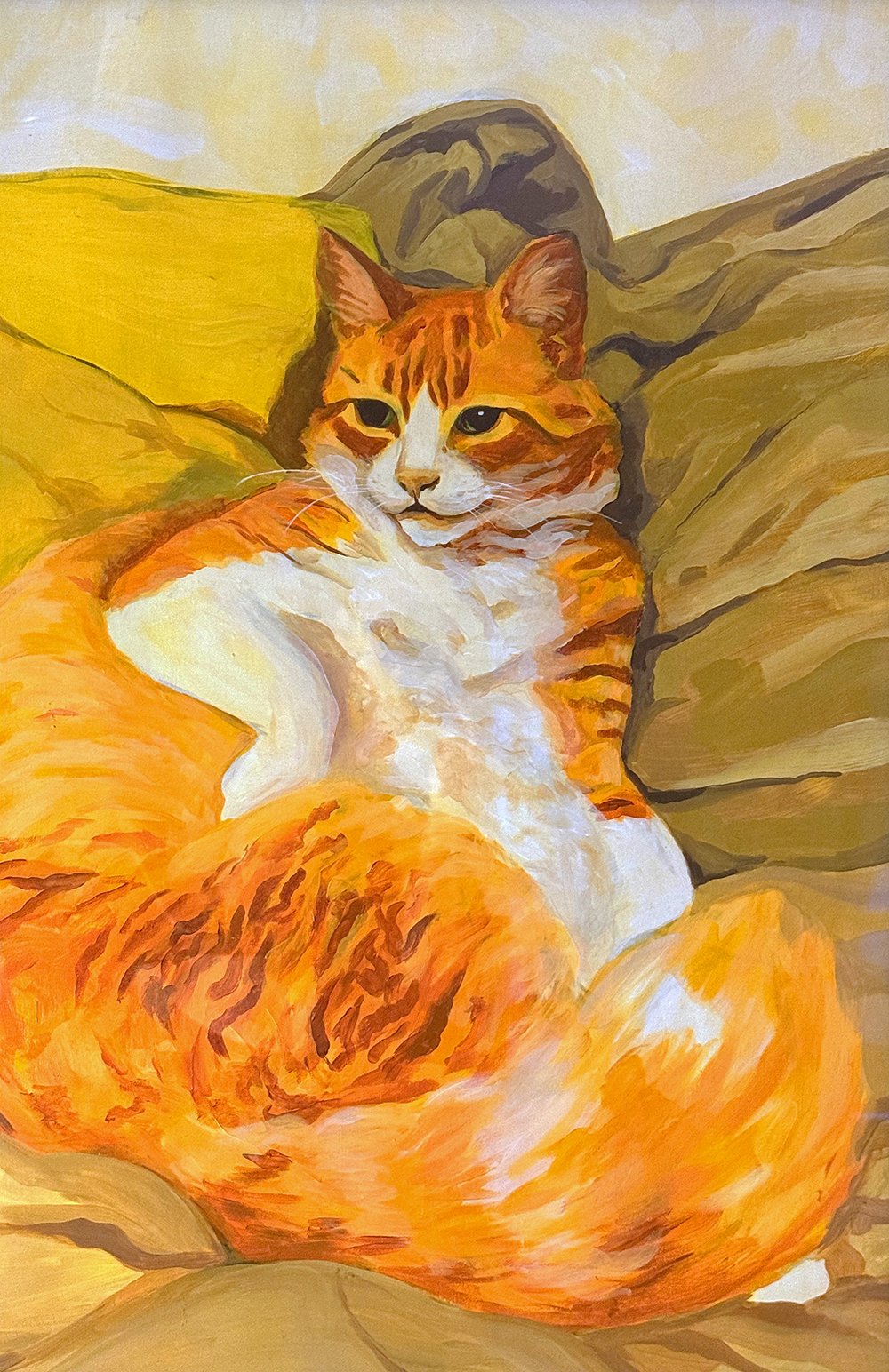
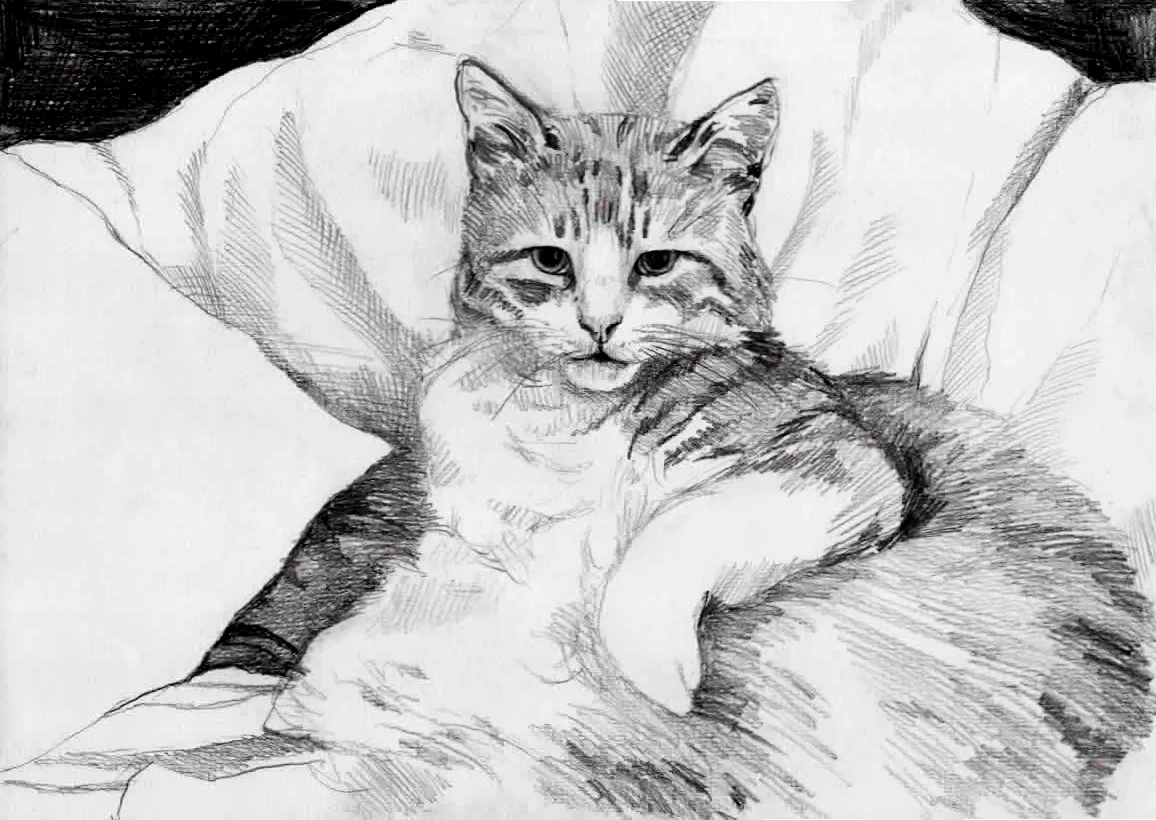
The armchair and the cat. The cat lies. It’s asleep, but rotates its ears toward the gentlest sounds. Alert. It opens its eyes. What hides behind the cat’s eyes that they shine so much? Does it even know it’s drawn? Probably not. Only it knows what it thinks. My drawing will show how I read the cat.
How do you draw a subject that moves so much if not together with these moves? There is a motion — the ear, the paw, the tail — the fur reacts to blows of air — the lines change. It’s not a stone to never twitch. It’s a living thing. For the cat I leave my sketch unclean. It should show the moves.
Covered in fur. A cat is a predator in a coat. I feel its softness so I come closer. Drawing softness is being close. Touching the paper more softly. Taking the feeling and giving the feeling. It’s a pleasure to draw softness.
A cat at play becomes something else — when it attacks, it stalks, prepares, then jumps, claws first. Fur in the air. Or: it’s calm, it just sits there — and then it suddenly bats an object down. And runs. To draw a cat that follows its hunting steps — stalk, chase, pounce, grab, bite, run again — I must be as fast. I have a bigger chance to draw a slow stalker than a fast pouncer, and almost no way to draw a cat going batshit — motion itself personified.
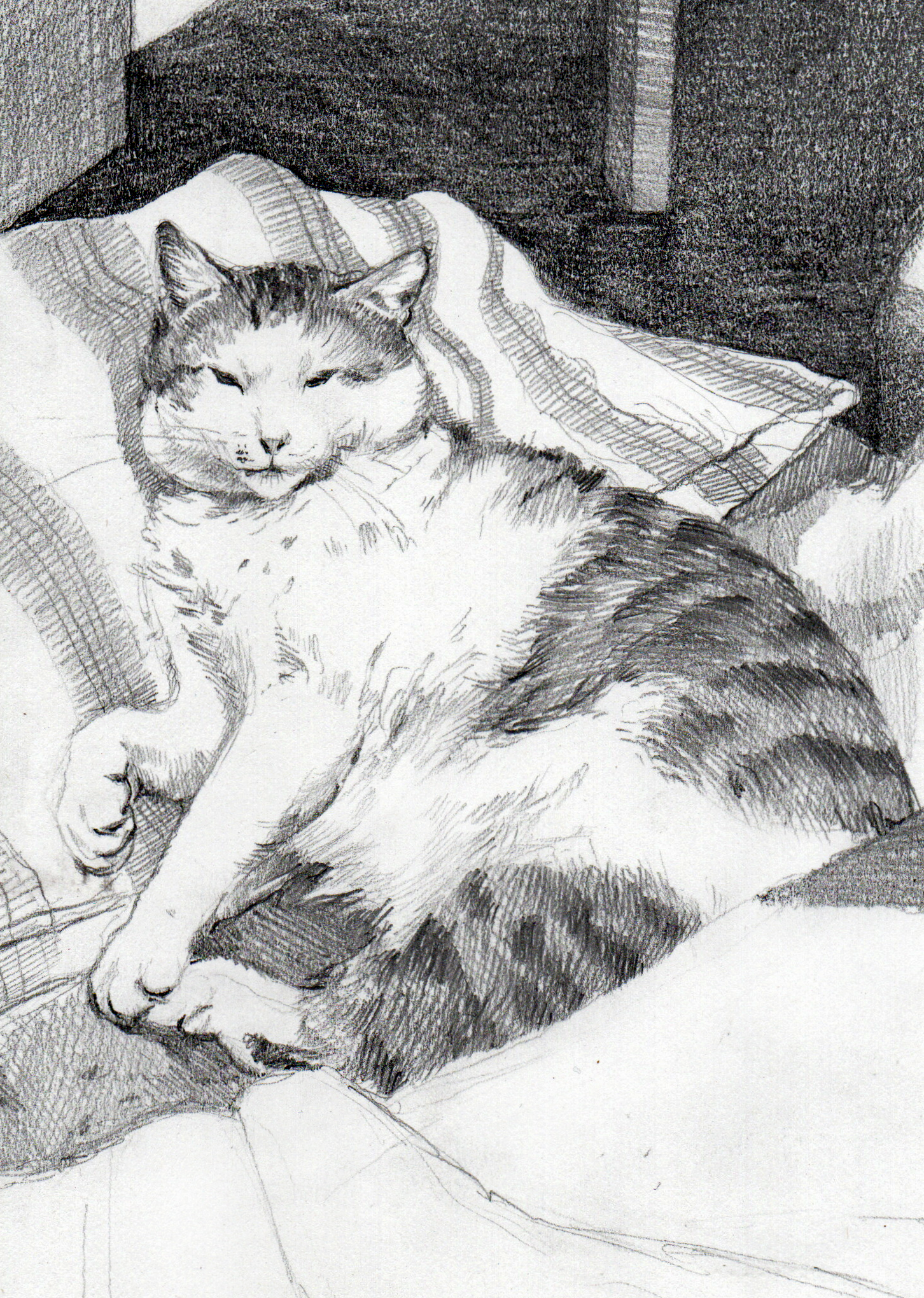
Speed works on both ends. Cat jumps. I draw. Details have no chance; they are lost in the move. It’s unsettling — and a worthy exercise. The hand moves — fast, fast! Stroke after stroke, quick! Don’t think. Be only eye and hand. Mark the paw, point the ear. Twist here, arch there. The cat has jumped to the other chair. The paper shows how much I grasped. Not all, but it must do. I don’t add because I don’t risk easy fiction.
I’m being trained.
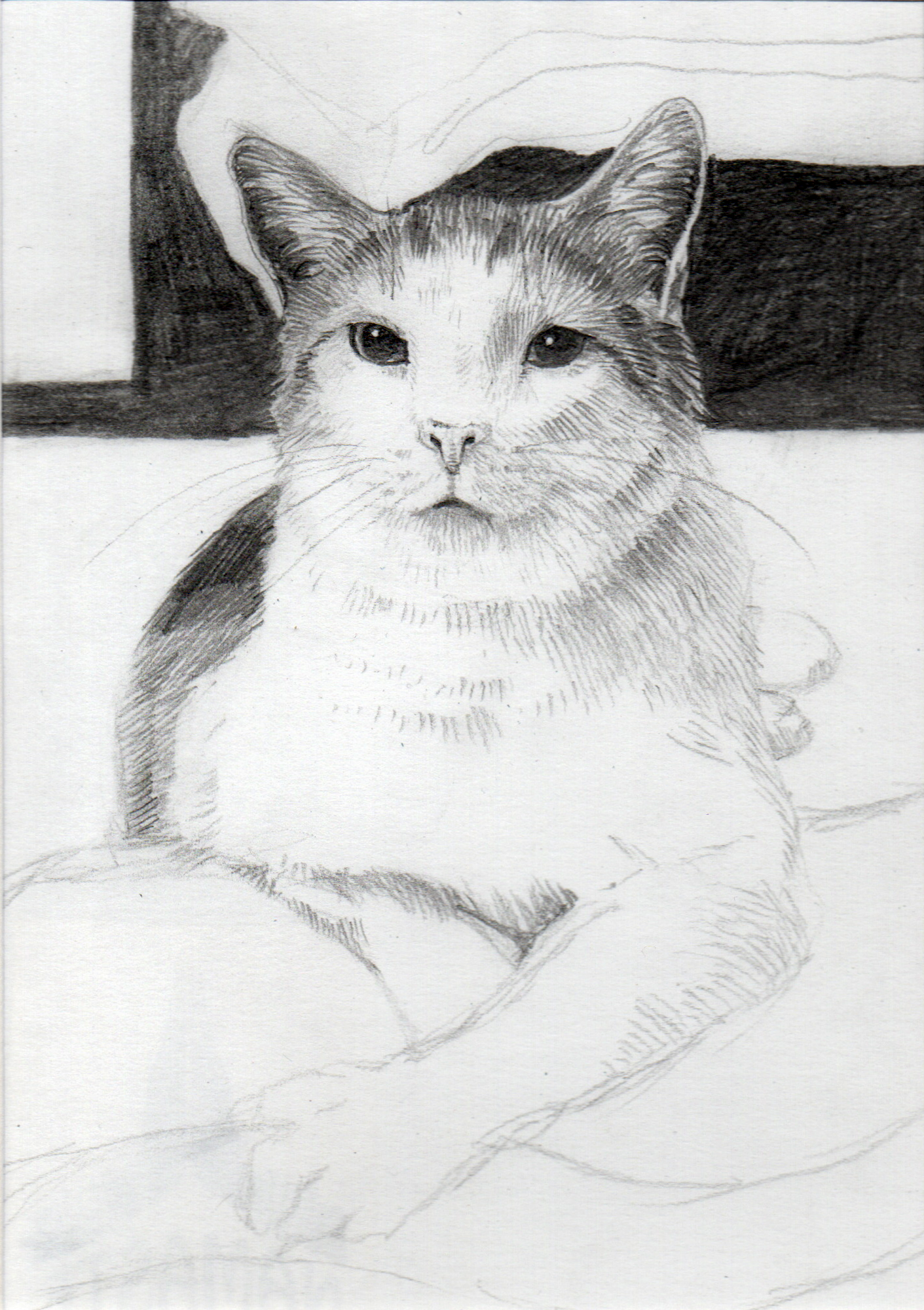
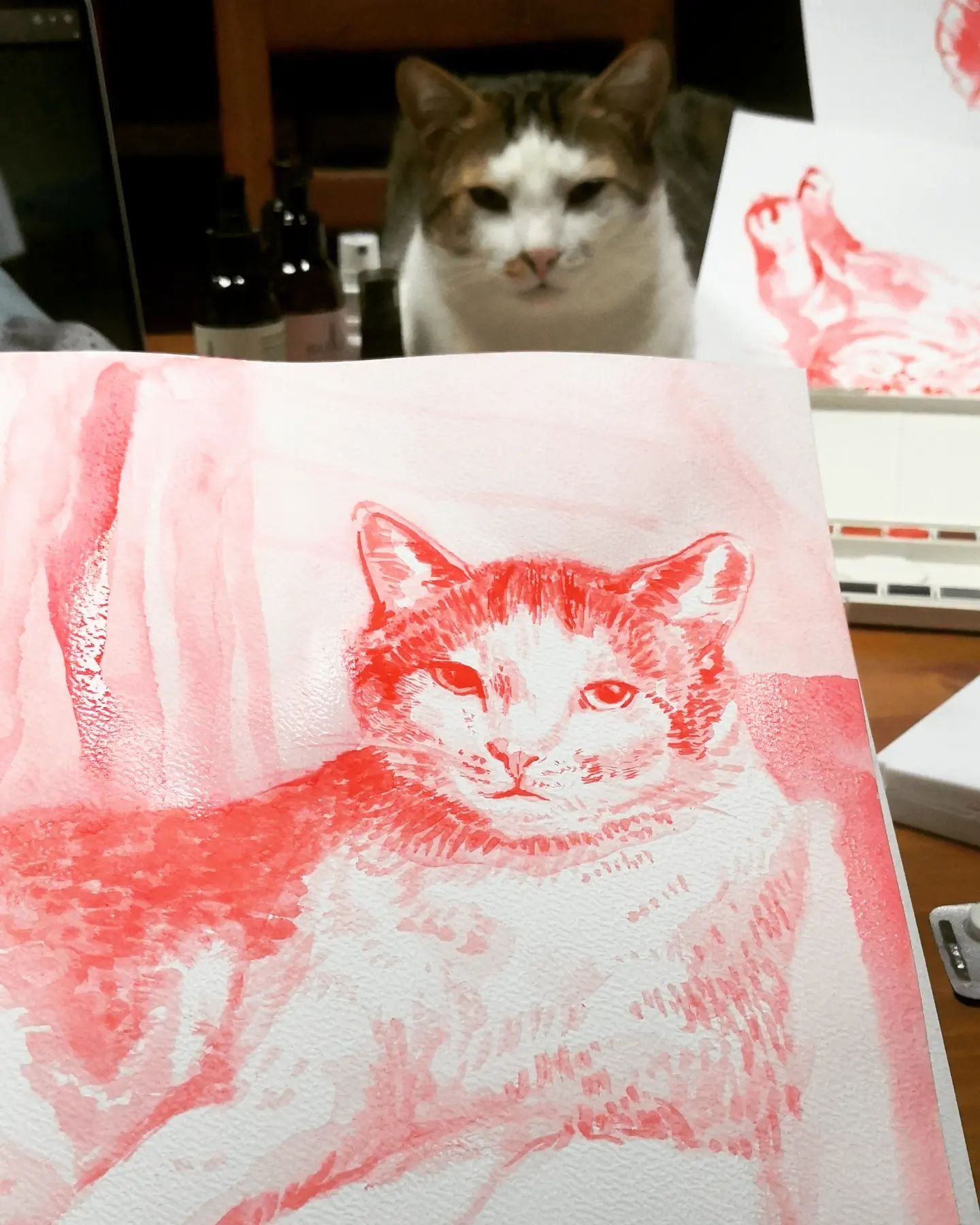
My teacher is not any cat. It has its looks: slight squint, hooked nose, specific whisker length. It makes different faces for what it likes and dislikes. It bends the tail, and sits, and yawns, in its own way. This makes a cat the cat. The particular one that can be drawn, and should be drawn. To show it is to respect the muse. If I draw THAT cat, not ANY cat, then I pass.
I end with a picture that is good, yet technically incomplete. It cannot hold the cat as a whole. A glimpse well drawn is enough. The one aspect moved to paper already shows my cat.
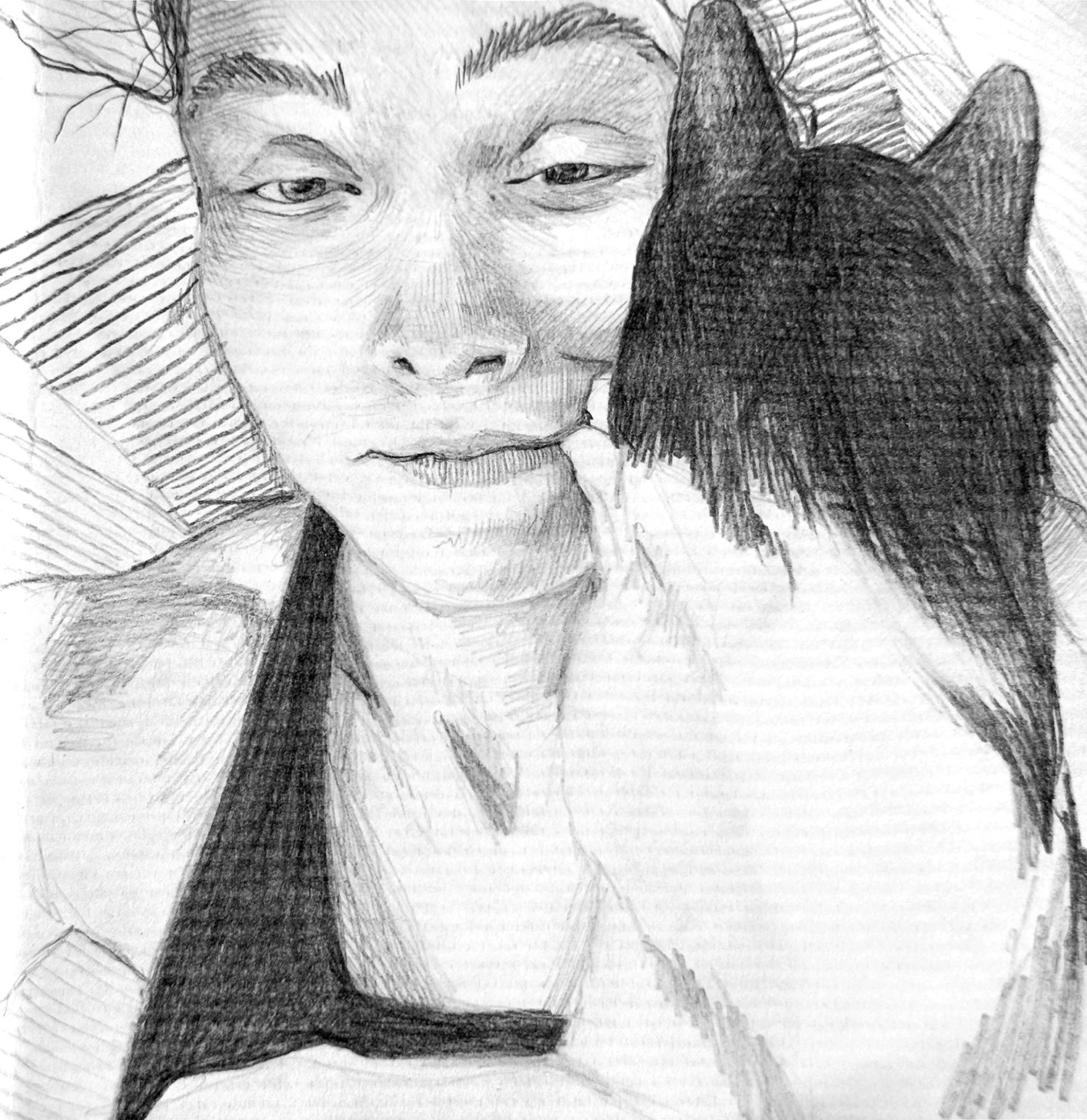
My cat. I love my cat. And my cat likes when I draw. When I sit still. Jumpable — it must think. So it jumps onto my lap. A mellow cloud with some weight, giving me warmth. Lets me gently pet its back — my fingers dip into the soft fur. I get as much from this touch as the cat gets. And then — the purr comes — the cat vibrates. This makes me forget — to think, to draw, who or where I am. The cat is happy, and so am I. Only the drawing ends.