
Weight of Comfort
Imagine thousands of tiny electrical sparks racing just under your skin. Not pain exactly — more like noise. Constant, low-level interference that your brain can’t tune out. A hair falls on your forehead. A draft moves through the room, felt on your neck or arm. There’s a dry patch on your back that you can’t reach with calming cream. Each of these becomes a signal your nervous system refuses to ignore. This is hypersensitivity.
My eyes, my ears, and my skin register everything; much of it tempts, intrigues or annoys; everything demands a great deal of attention.
I learned early that weight helps. Heavy clothes became my uniform — long sleeves, thick fabrics, layers that press down and quiet the receptors. Hair always tied back, because a loose strand on my cheek, in most cases, will steal my focus immediately. I didn’t understand the science behind all this as a child. I just knew that my favourite hat and a chunky hoodie felt like armour (they still do), and a thin shirt felt like being constantly exposed to the “too much”.
I have autism. This is not a sad story.
Autism, for me, is a great operating system. Like Ubuntu was some years ago — unpopular in general, but very niche-appreciated software.
My type of autism comes with a specific set of features. Good ones: hyperfocus that locks in and doesn’t waver; structural, multi-layer thinking; hypersharp perceptiveness; curiosity that keeps going; and this ability to lose myself in literally anything and find it genuinely fascinating. It’s a curse and a good thing.
Good for work. I love my work. I love the deep concentration, the problem-solving, the satisfaction of researching, discovering and organising information, of building something complex and polished in every detail. These make my professional life a true pleasure.
But with such a complex program, this operating system often runs hot. High performance comes with high maintenance.
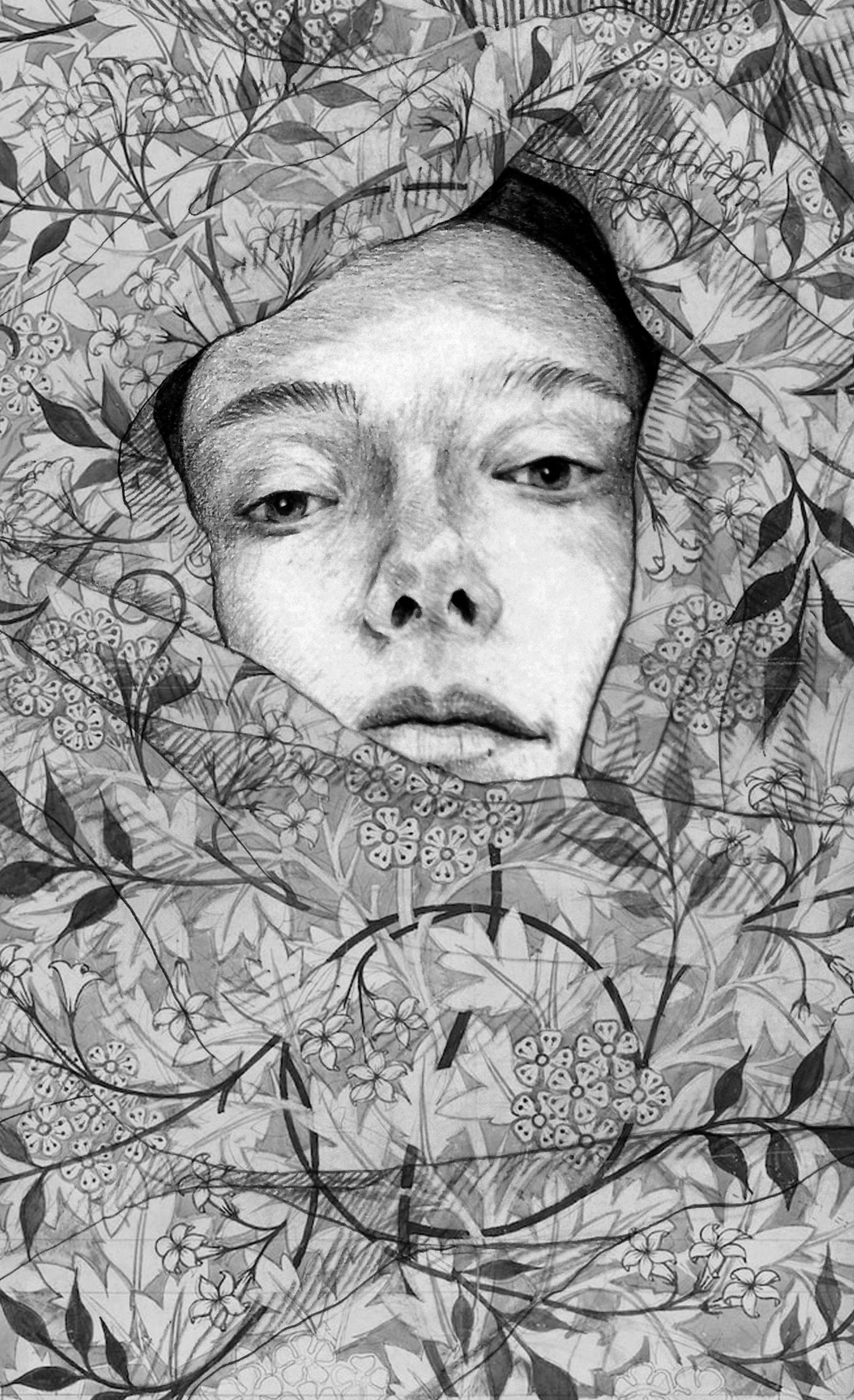
The weight of comfort — Mira Maria Belniak, pencils on paper, mixed media, A5, 2017
When I’m deep in focus, I forget I have bodily needs. I feel my body; all the sensory signals keep arriving, but the needs like thirst, hunger, tiredness, and pain don’t get processed. They can remain (almost or) totally unnoticed. Instead, they sort of queue up in the background, hang on to my poor nerves. Then, when I finish working, the focus lifts, and everything that was “hanging” comes into the foreground of my already tired mind.
And some of these times, my nerves go crazy — they start to feel like a discharge lamp, a fluorescent tube where you can see chaotic rays jumping and jumping inside. And the more tired I get, the easier and heavier I overstimulate, the more discharge jumps everywhere in my body and mind. Too wired to sleep, too depleted to function. Lying down feels like lying on static. The body wants rest, but the skin keeps transmitting, and the mind collects it all, no matter the cost. This can be predicted and prevented, but once I fall into this trap, the choices no longer have their classic power; the body takes over.
Luckily, I am not the first person with this kind of nervous system to search for solutions. Temple Grandin, the animal scientist, built herself a hugging machine decades ago — a device that applied firm pressure to her body when overstimulation became unbearable. (By the way, Leonard Hofstadter built one for himself, too, in The Big Bang Theory. Oh, multilevel bracket writing.) I understand that impulse completely. When your system is this reactive, you need something that speaks its language. Not words, not willpower. Pressure. Weight. A physical signal heavy enough to override all the jumping rays and calm them down. This is what a weighted blanket does.
The concept is simple: a blanket filled with (nicely cold) glass beads or pellets, heavy enough to apply even pressure across the body. The effect is called deep pressure stimulation. It activates the parasympathetic nervous system — the one responsible for rest. It increases serotonin and decreases cortisol. Tells the body, in its language: “You can stop being on alert now, calm down”.
For me, it works magically, like a reset button. I climb under my 12kg blanket after a day of running hot, and within minutes, the static begins to fade. The sparking slows. The accumulated noise drains out. I relax. Sleep becomes possible again. And it often comes within minutes.
My blanket is not a cure. It won’t stop overstimulation from happening (that’s on me, I guess). But it’s a genuine tool — a piece of equipment that helps a high-maintenance system cool down after the daily slight overheats that often come with this particular brain software.
And it’s not only for autists. Overstimulation is becoming a quiet epidemic these days. The modern pace of life — constant connectivity, communication and notification floods, open-plan offices, the cult of productivity and the church of sell it all — pushes more and more nervous systems past their limits. You don’t need to be autistic to end a day feeling like a fried circuit. So if it happens, remember: for some, the weighted blanket works.
With this text, I want to thank Temple Grandin, who invented deep pressure stimulation. Not because it’s groundbreaking. But because it makes some lives, mine included, a little easier to manage.
References & Further Reading
On autism and sensory hypersensitivity:
-
Cascio, C. J. et al. “Tactile Perception in Adults with Autism: A Multidimensional Psychophysical Study.” Journal of Autism and Developmental Disorders.
-
Orefice, L. L. et al. “Peripheral Mechanosensory Neuron Dysfunction Underlies Tactile and Behavioural Deficits in Mouse Models of ASDs.” Cell, 2016.
-
National Autistic Society: “Autism and sensory processing” — autism.org.uk
On weighted blankets and deep pressure therapy:
-
Ekholm, B., Spulber, S., & Adler, M. “A randomised controlled study of weighted chain blankets for insomnia in psychiatric disorders.” Journal of Clinical Sleep Medicine, 2020.
-
Meth, E. M. S. et al. “A weighted blanket increases pre-sleep salivary concentrations of melatonin in young, healthy adults.” Journal of Sleep Research, 2023.
Temple Grandin:
-
Thinking in Pictures: My Life with Autism — Temple Grandin (book, 1995; expanded edition 2006)
-
Temple Grandin — HBO movie, dir. Mick Jackson, starring Claire Danes (2010)