Crayon Rescue Project
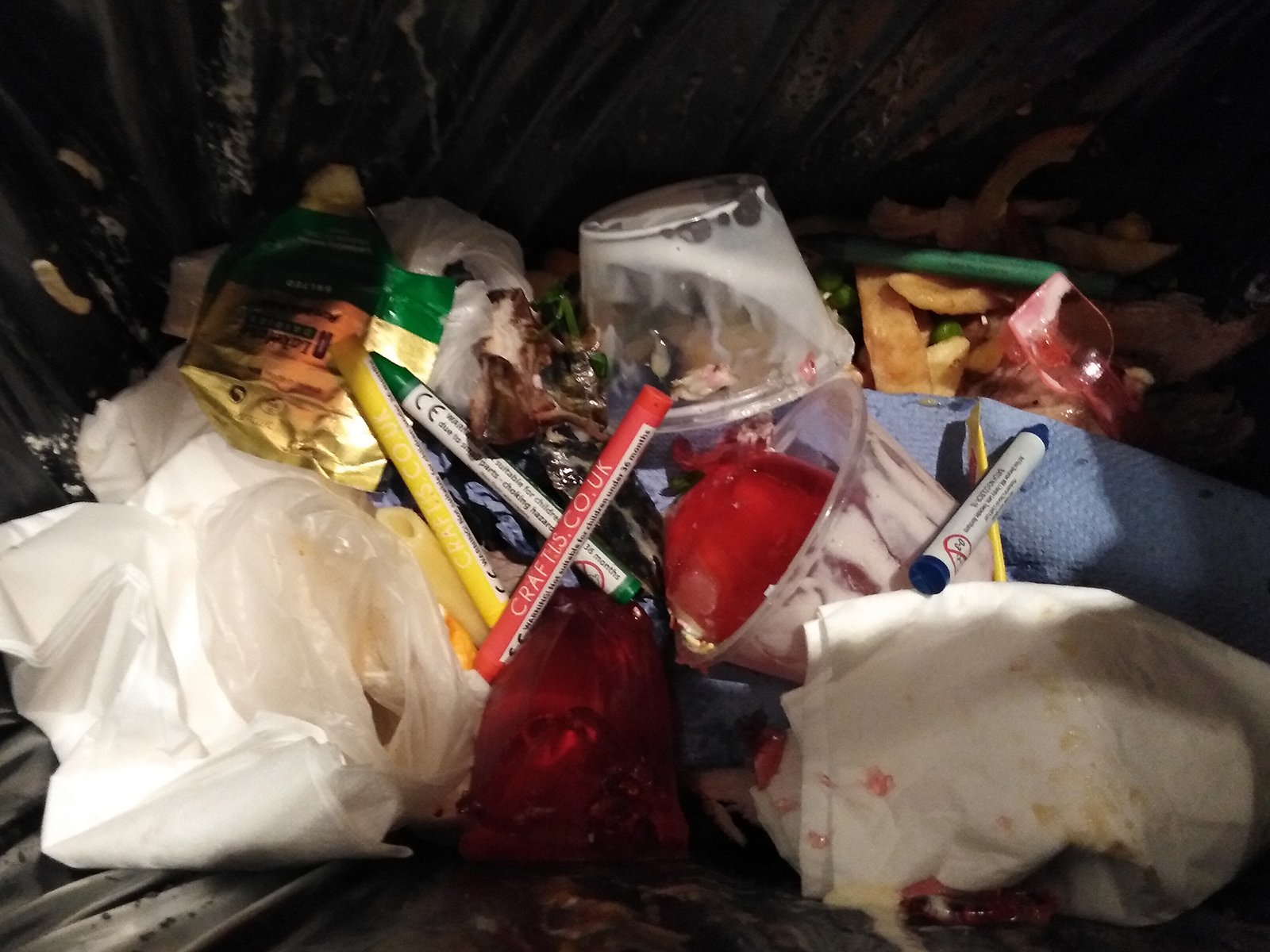
Butlin’s restaurants give crayons to children at every meal. It’s a nice idea — kids draw so that parents can eat in peace. But when the meal ends, most of the crayons stay on the table, and the staff clear them as they clear the plates from the rest of the food, straight into the bin. The table must be cleared and cleaned quickly so the next family can sit down. And the next kid can get fresh crayons. As the place is a popular holiday spot, the cycle repeats multiple times across every service, every day, and every restaurant in the large Butlin’s complex.
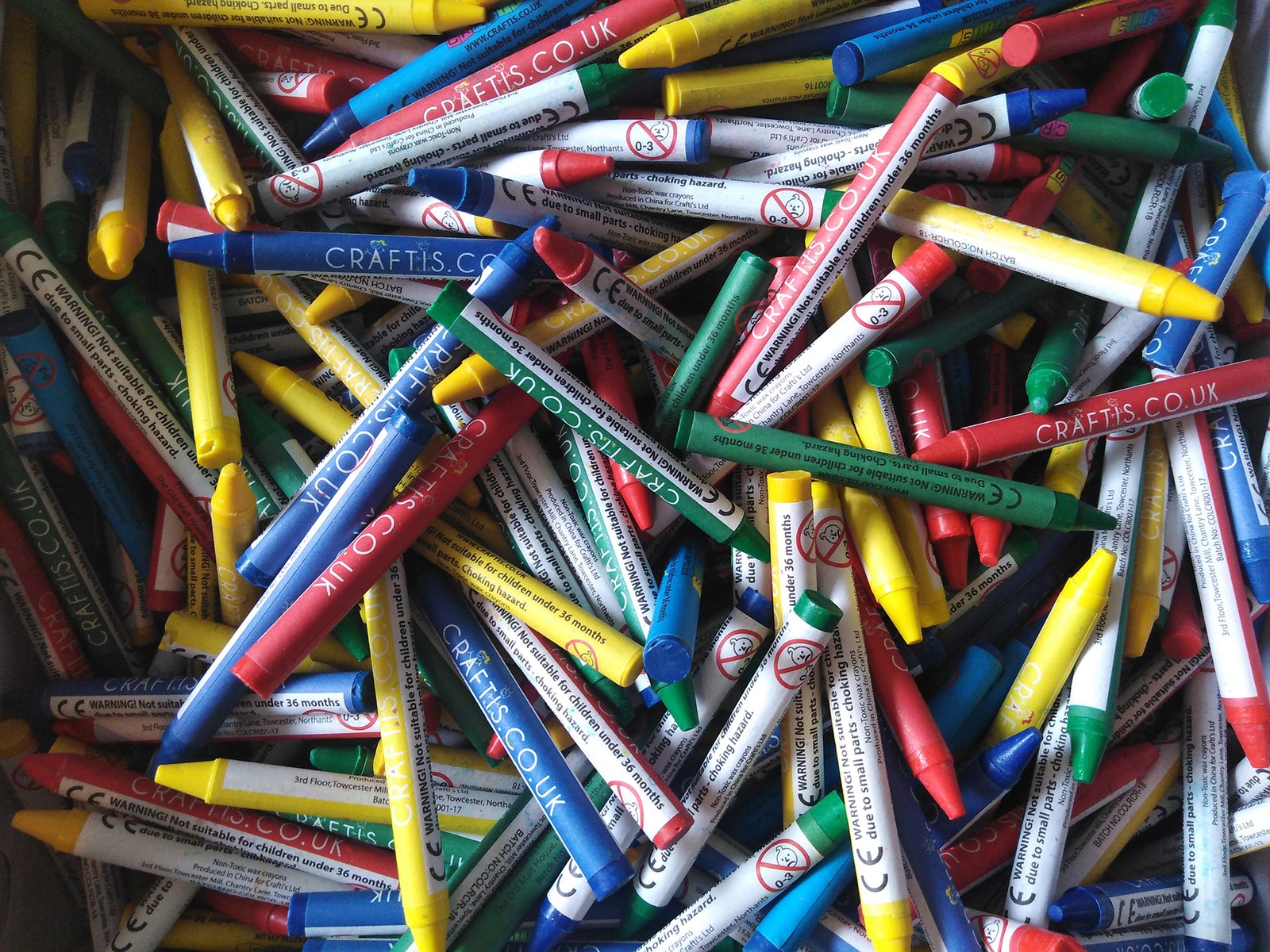
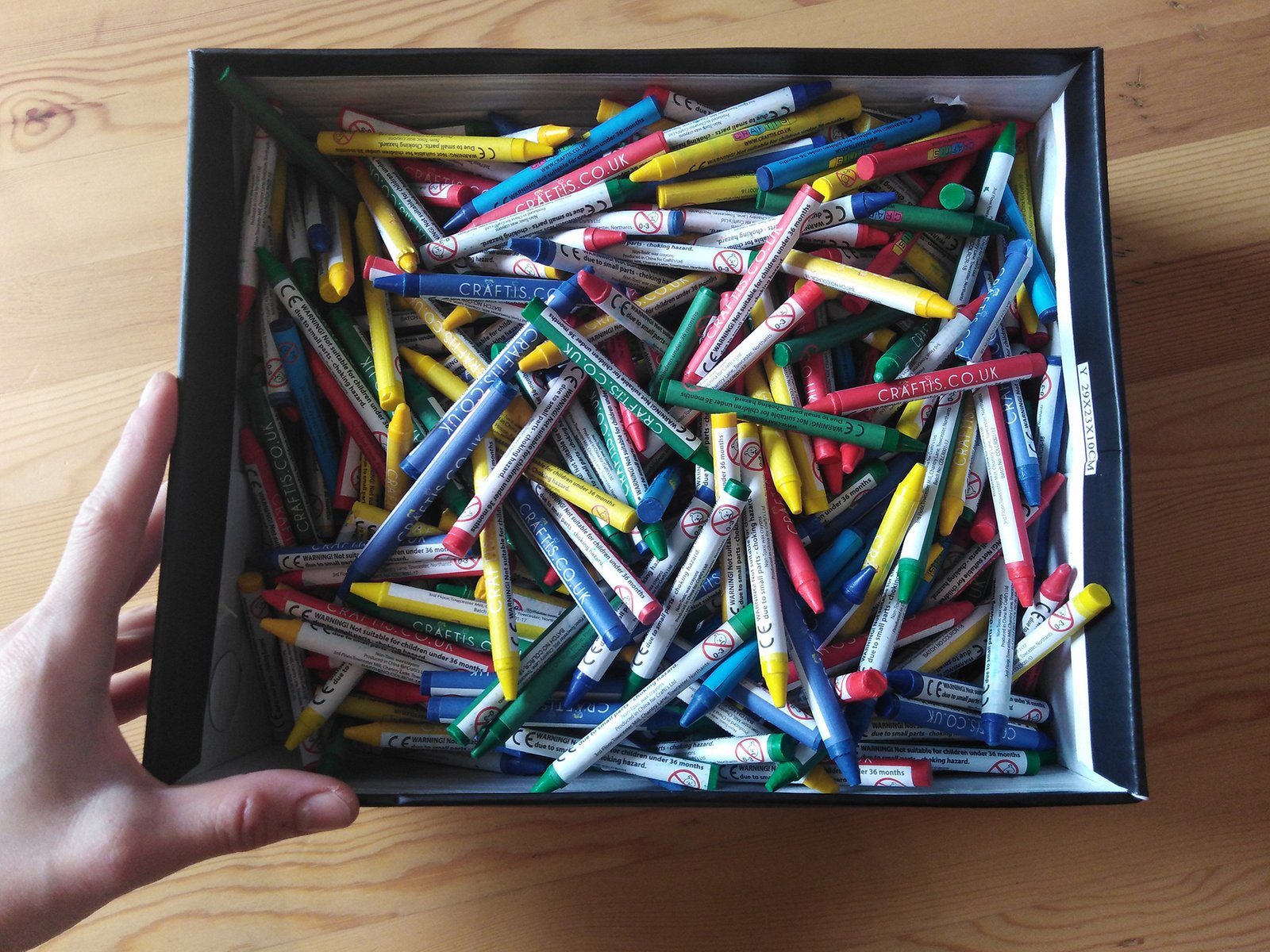
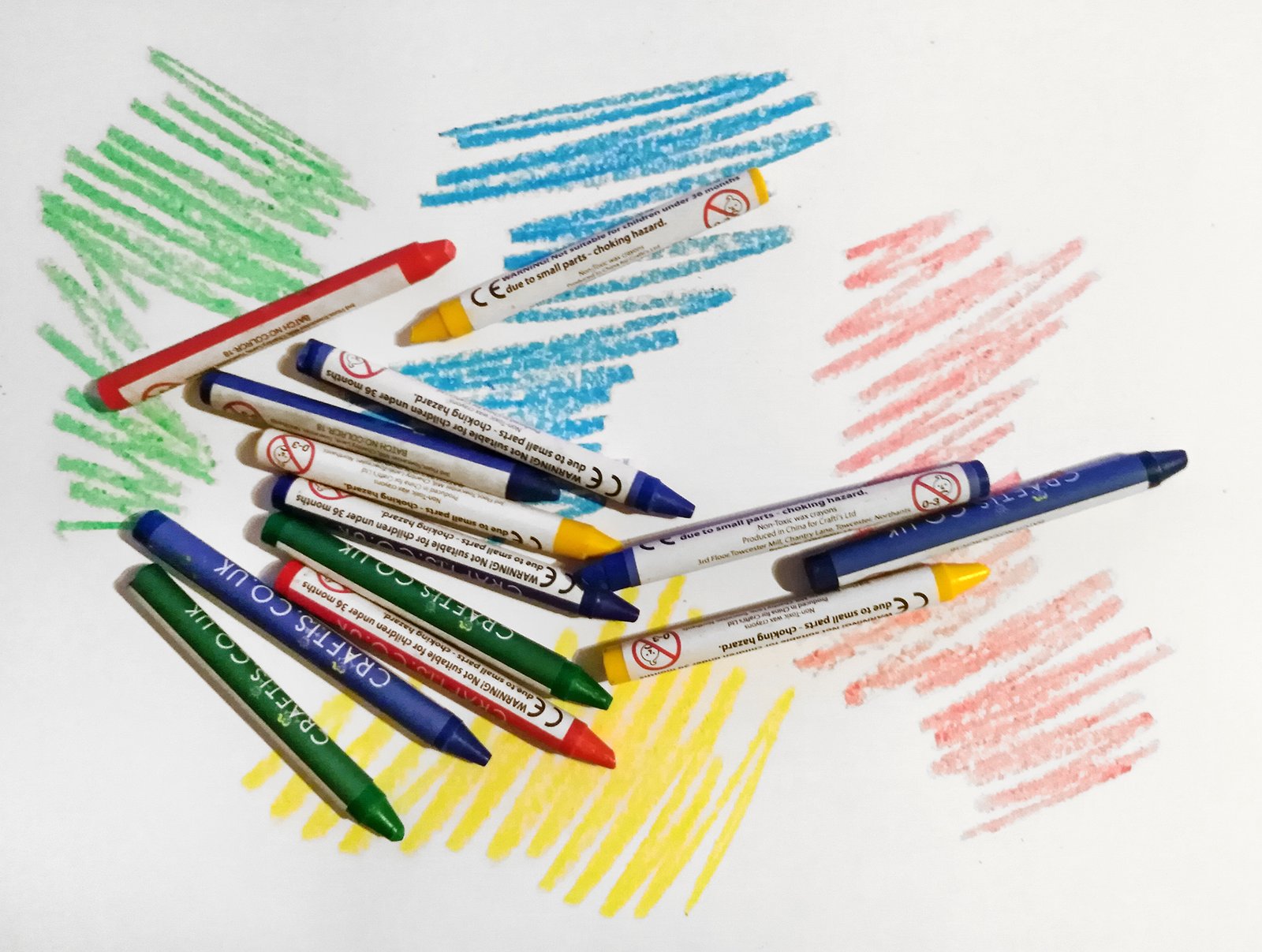
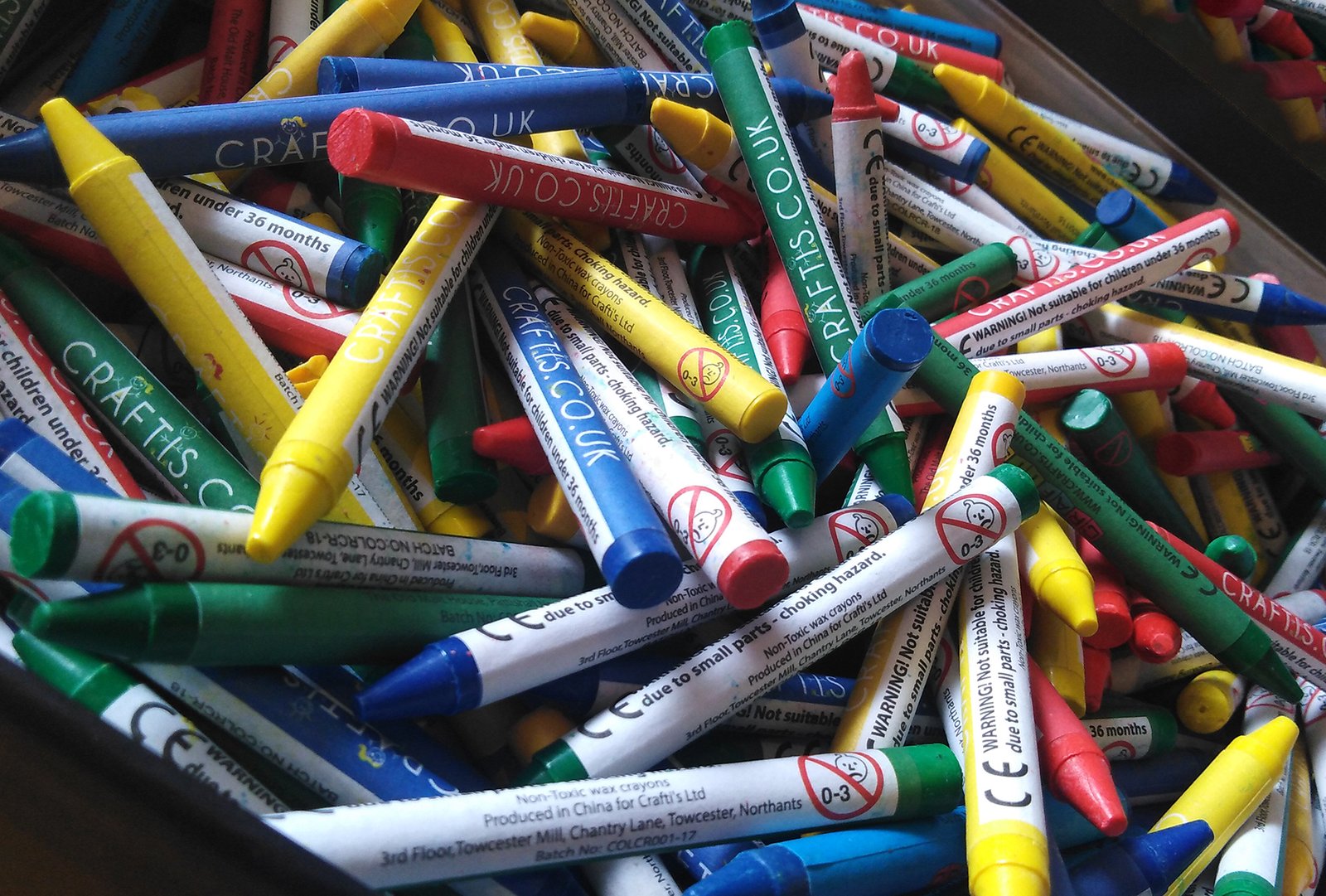
I was working as a catering team member at Butlin’s Bognor Regis, and watching this happen on every shift. I couldn’t throw away crayons, tho, so I started collecting them and every day, bringing them back home and putting them in a box. The obvious next step was to count.
Data collection
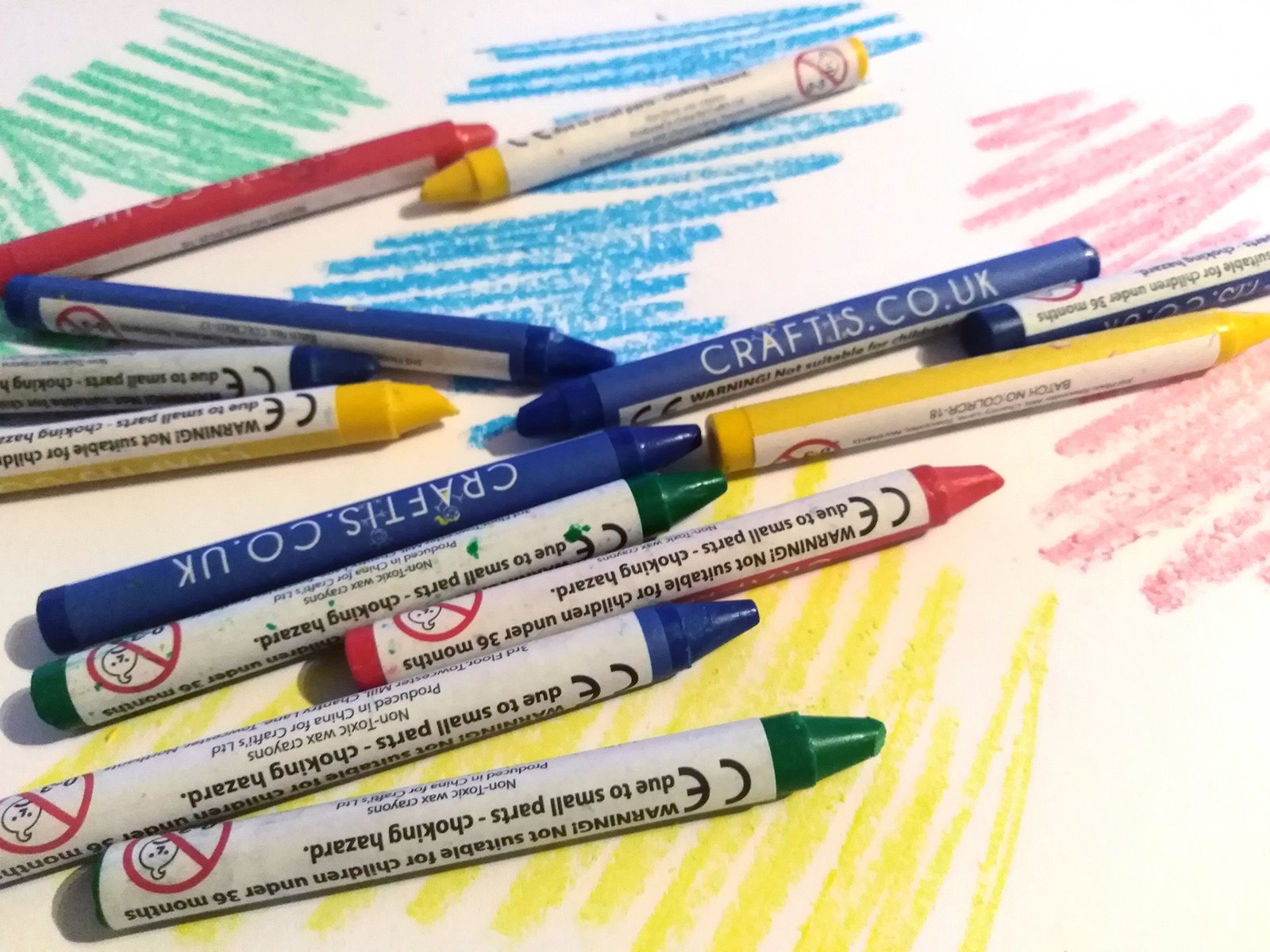
My 28-day data collection study at The Deck Restaurant ran from March 17 to April 13, 2019. Every crayon that would have been thrown away — and wasn’t damaged (broken) — was systematically collected across all service periods. Disposal patterns were tracked by crayon state (singular, opened and unopened 4-packs), quantities, time and day. Peak waste coincided with family dining hours, especially on weekends and on bad-weather days.
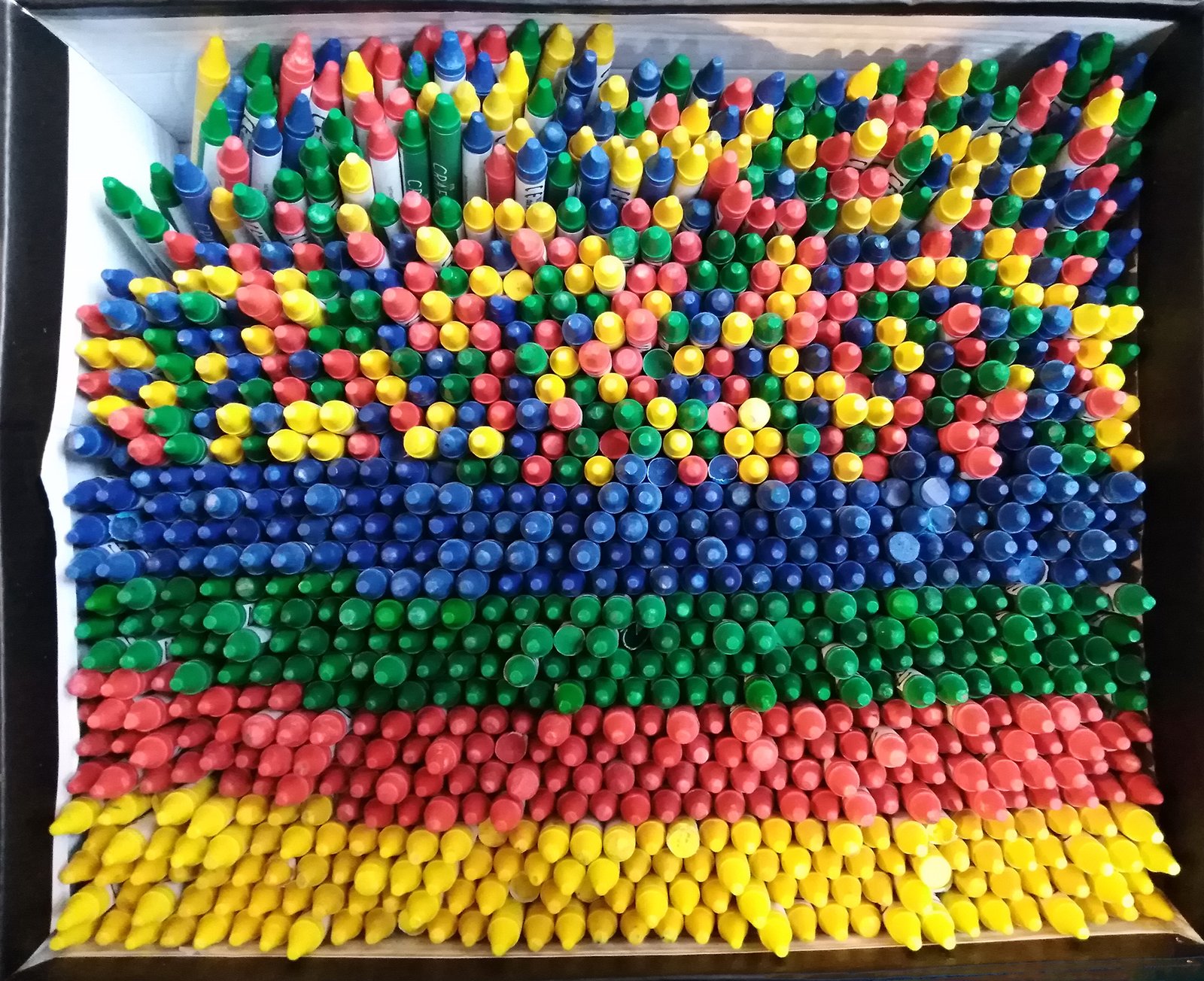
The result: a total of 1,615 crayons, in perfect condition, collected by one person at one restaurant over four weeks. 1,615 crayons that otherwise would be thrown away.
The Deck, where I was working, has a 12-person floor team. If we multiply that out, we get over 18,000 crayons per month.
That gives over 216,000 crayons per year, from just one restaurant.
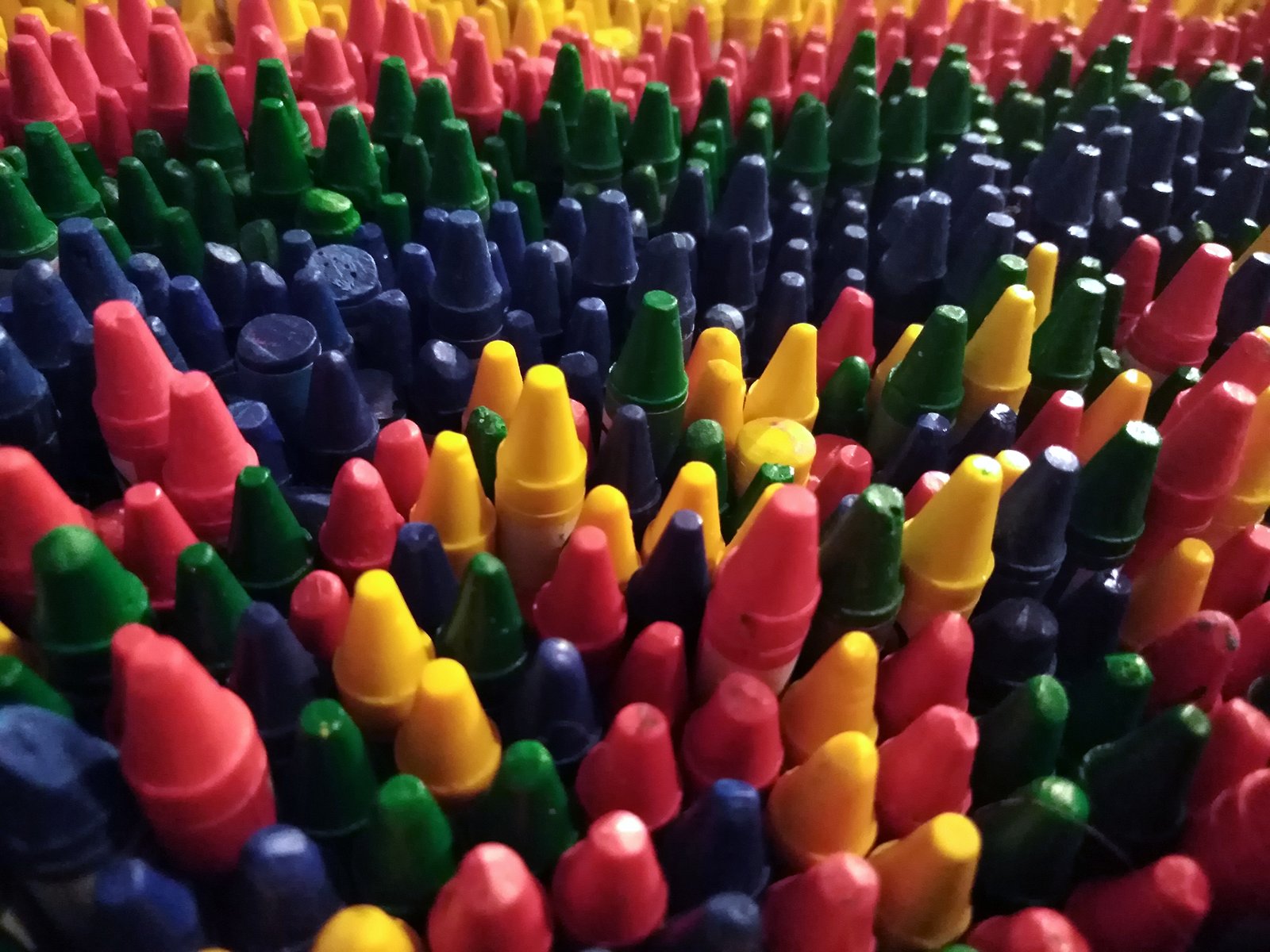
These weren’t broken or useless crayons. They were perfectly good, often not even opened from the foil, going straight to landfill because nobody had set up an alternative. Nobody cared.
Proposal & implementation plan
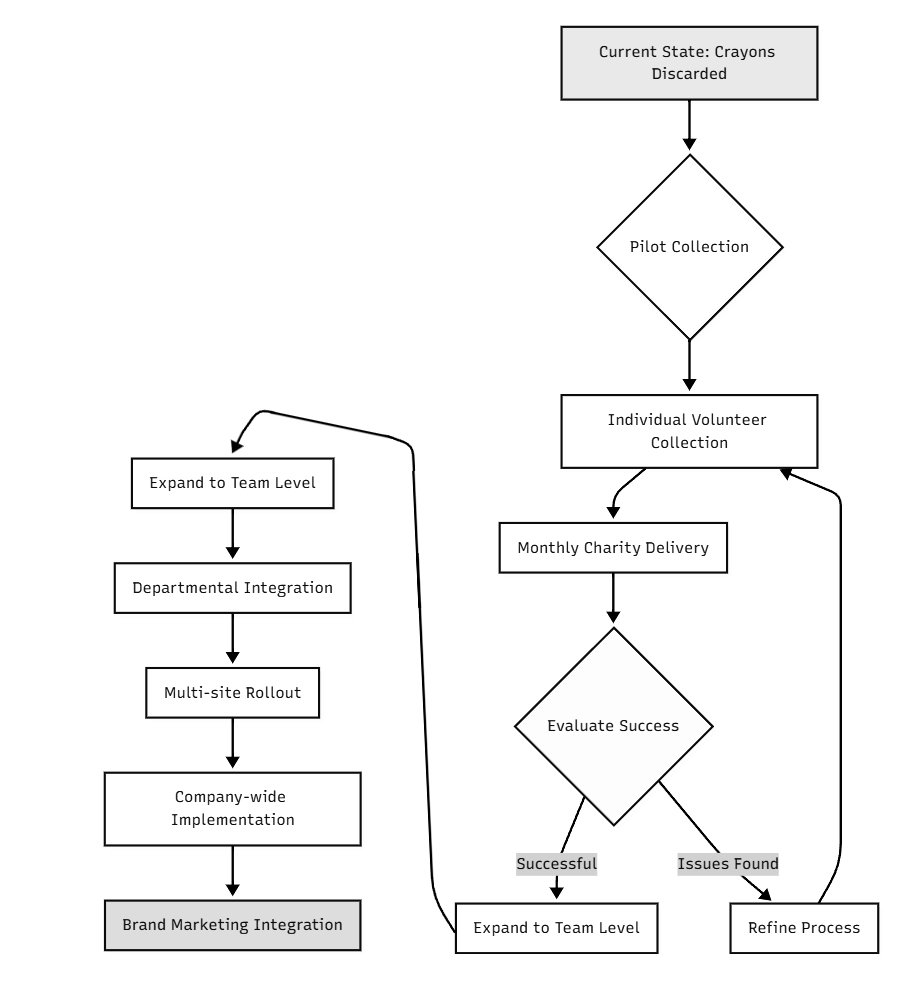
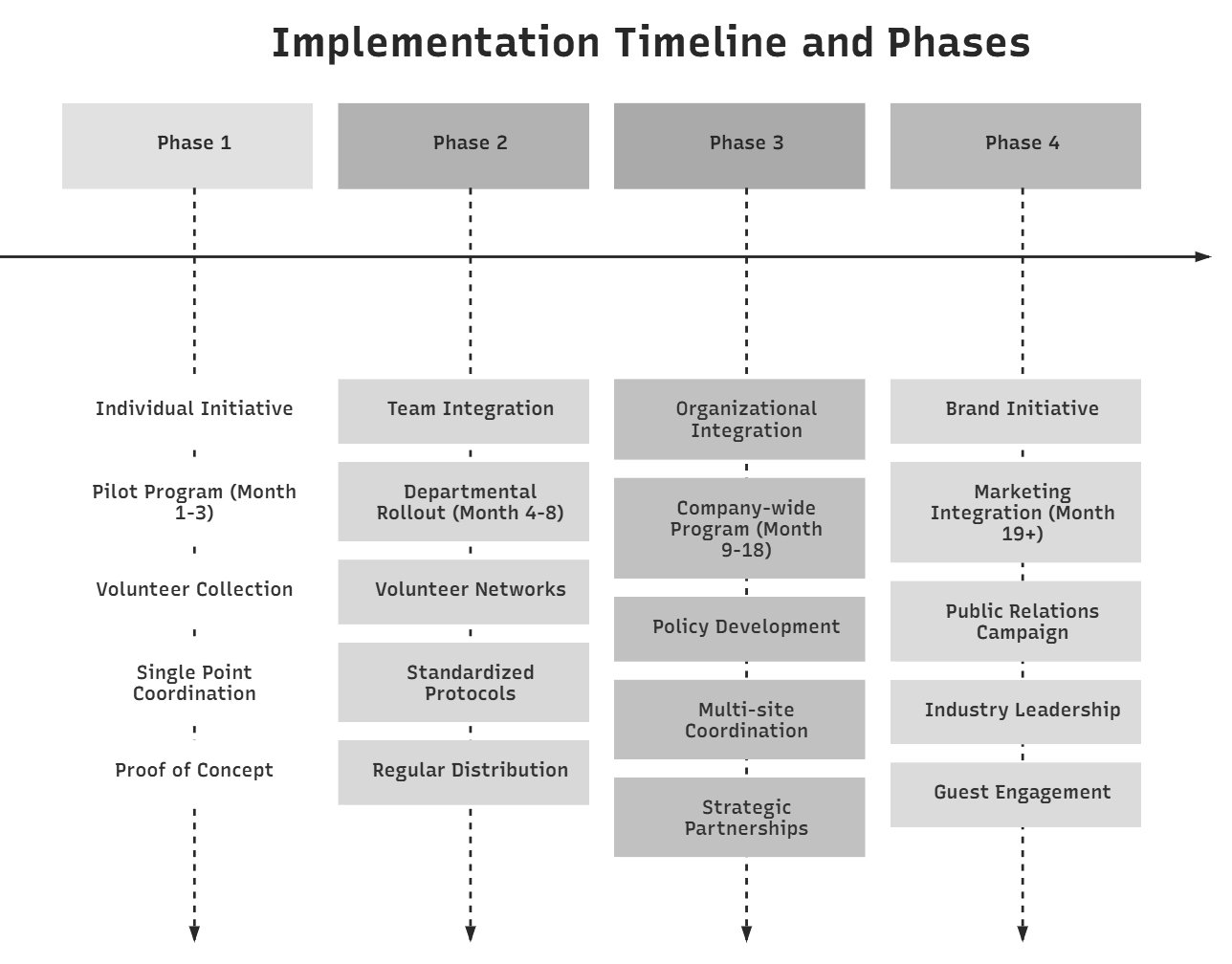
The data, and a wall of “oh, you know, what can we do,” led to a serious proposal — a full plan with four detailed implementation phases.
- The first phase was a pilot: volunteer-based collection within existing operations at a single location, proving the concept without disrupting anything.
- The second phase scaled to a departmental level — formalising volunteer networks across the restaurant team, standardising collection and sorting protocols, and establishing regular distribution schedules with charity partners.
- The third phase moved to organisational integration: corporate policy across all Butlin’s sites, multi-location coordination, partnerships with national charity networks.
- The fourth phase was brand development — positioning the initiative publicly, engaging guests, and establishing Butlin’s as a leader in sustainable hospitality.
Each phase included quality standards: clear criteria for which crayons were suitable for donation, sanitation and sorting procedures, and regular audits to maintain consistency.
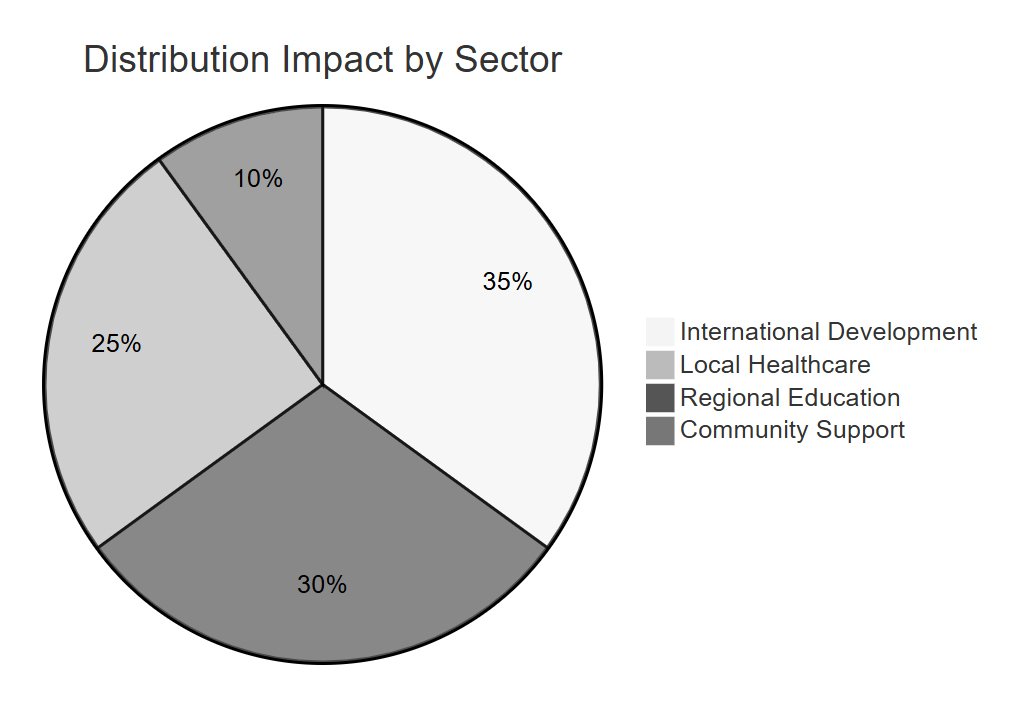
The project logo and all visual materials — including photos, charts and infographics on this page — are my work.
Potential partners
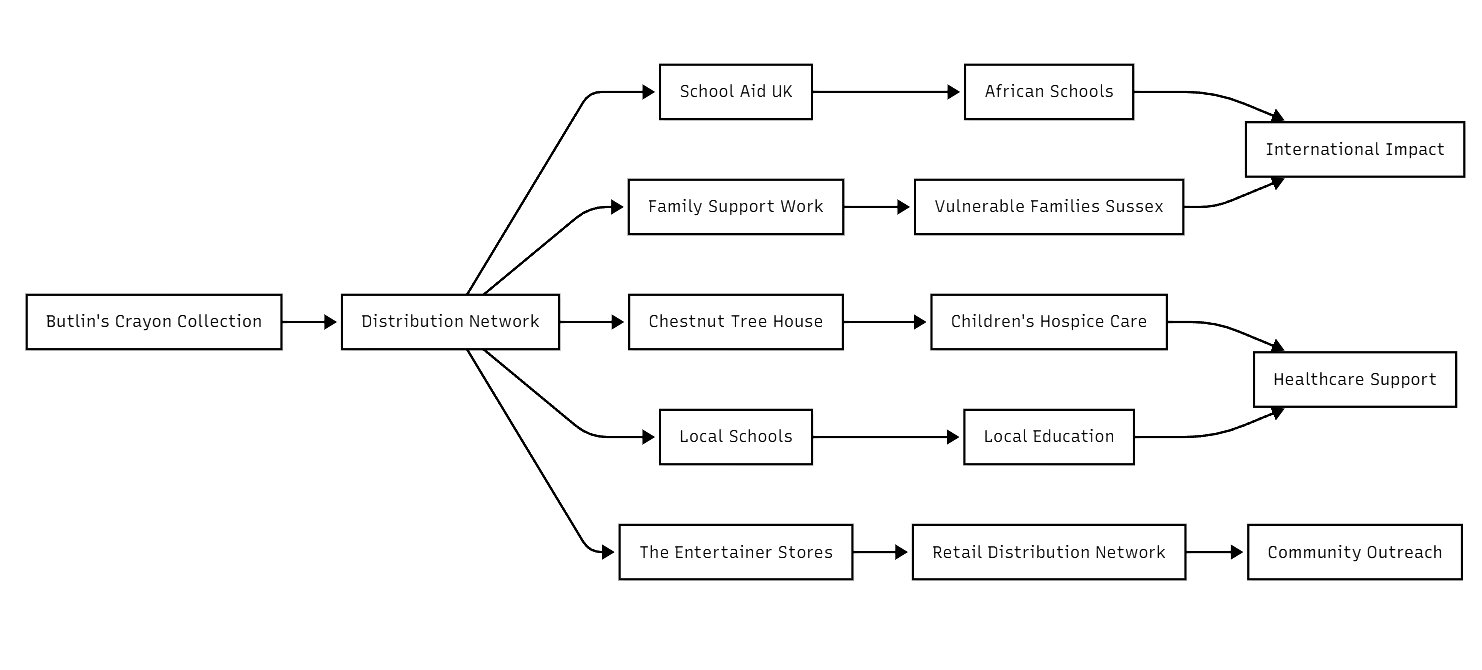
School Aid UK (NGO) was contacted and confirmed that they could take up to 20 boxes of crayons monthly for further distribution to schools in Africa through their existing network with The Entertainer stores. They identified crayons as a high-demand material but underrepresented in typical donation streams.
Other potential partners were also identified — Family Support Work, which has supported vulnerable families in Sussex since 1890, and Chestnut Tree House Children’s Hospice, the primary paediatric hospice for East and West Sussex, Brighton and Hove, and South East Hampshire, caring for 300 children and young adults with life-shortening conditions.
The maths was simple and fairly constant, and the crayons were already being handled — the only change was to redirect them from a bin to a box. The additional effort was minimal: placing collection boxes in the clearing areas and managing periodic pickups. No extra budget, no disruption to service.
The decision
The Butlin’s board approved and awarded the project.
Billy Butlin founded the company on a commitment to children’s happiness. He partnered with Great Ormond Street Hospital Children’s Charity from 1938 onward. The Crayon Rescue Project wasn’t an inventive project, nor was it a new corporate value — it was about noticing that an existing solution wasn’t being applied to an obvious problem. Similar initiatives existed in other countries, like the US — The Crayon Initiative in California, Crayons Matter in North Carolina, No Crayon Left Behind in Pennsylvania — but nothing comparable, yet, in UK hospitality.
This project was a collaborative effort, supported by Kayla Leck, Klaudia Kasica, and numerous colleagues across Butlin’s departments, who also recognised its potential to reduce unnecessary waste and build charitable engagement. Their encouragement and insight helped me develop the initiative from individual observation through testing to a comprehensive organisational proposal.
The full project can be found here: The-Crayon-Rescue-Project-Original.pdf